
How Utah Jail Mugshots Work
A Utah booking photo is usually created by the county jail that books the person. The photo may appear on a current roster, in a recent-bookings list, or on a profile page, depending on the county system. There is no single official statewide mugshot gallery for every Utah jail. The right search path is the county that booked or holds the person, not a statewide photo index.
State prison photos are different. UDC's public-information guidance says certain information about inmates and offenders under supervision is available to the public without a GRAMA request, and that list includes prison photo or mug shot. That does not mean every county roster will display a booking photo, that every historical photo stays online, or that restricted records will be released. It means Utah treats some offender photo information as a public category when the record is a UDC record and no law or exemption blocks release.
The safest wording for Utah is practical: county rosters vary, UDC may make prison photo or mug shot information public, and formal records requests still depend on GRAMA, agency custody, safety, security, privacy, sealed-record rules, juvenile restrictions, and local records practice.
The UDC public-information and GRAMA page identifies prison photo or mug shot as a public offender-information category while noting that safety, security, and privacy concerns can limit release.

That UDC category applies to corrections records, not to a promise that every Utah county jail publishes every booking image online.
Where to Find Utah Booking Photos
Start with custody, then move to the photo. A person booked after a local arrest is normally a county jail record. A person sentenced into state custody belongs in the UDC system, even when physically housed in a county jail under the Inmate Placement Program. A federal prisoner belongs in BOP, and immigration detention belongs in ICE ODLS. A mugshot search that skips this step can send users to the wrong agency.
- Identify the county that booked or currently holds the person. If the arrest is recent, use the county of arrest first.
- Open that county from the County Directory, then use the local roster, sheriff custody page, or records contact provided there.
- Search by last name first. Add first name, booking date, or booking number if the county roster supports those fields.
- Open the individual profile if the roster has one. The photo, if public online, is usually shown with the booking or inmate profile.
- If no photo appears online, file a GRAMA request with the county sheriff or county records custodian. Describe the photo and booking record precisely.
- If the person is a sentenced state prisoner, check UDC Offender Search or UDC's records route instead of a county roster alone.
What a Utah Booking Photo Record Shows
A booking photo record is usually attached to identity and custody fields. Those fields can be enough to distinguish two people with similar names, but they should not be treated as a complete criminal record. Booking records are created early in the process, while court charges, amendments, dismissals, judgments, and expungement or sealing outcomes live in Utah court records.
| Field | What It Shows |
|---|---|
| Booking Photo | A custody image taken during jail booking or a prison photo associated with a UDC offender record, if the agency publishes or releases it. |
| Name | The name used by the jail, sheriff, court, or UDC record. Variants and prior names can affect searches. |
| Date of Birth | An identity field that helps separate people with similar names when it is public. |
| Booking Date | The date tied to the jail intake event, not necessarily the date charges were filed in court. |
| Booking Number / UDC Number | A local jail identifier or a statewide UDC offender number. The two are not interchangeable. |
| Charges or Offenses | County booking allegations or UDC sentence/offense information, depending on the record owner. |
| Housing or Facility | The jail, prison, county placement, or community correctional location shown by the record. |
| Release or Board Information | County release details, bond status, or UDC parole/expiration and Board-related dates when public and applicable. |
The official UDC Offender Search page is the proper source for state-supervised people and warns that unsentenced county-jail detainees are outside that search.
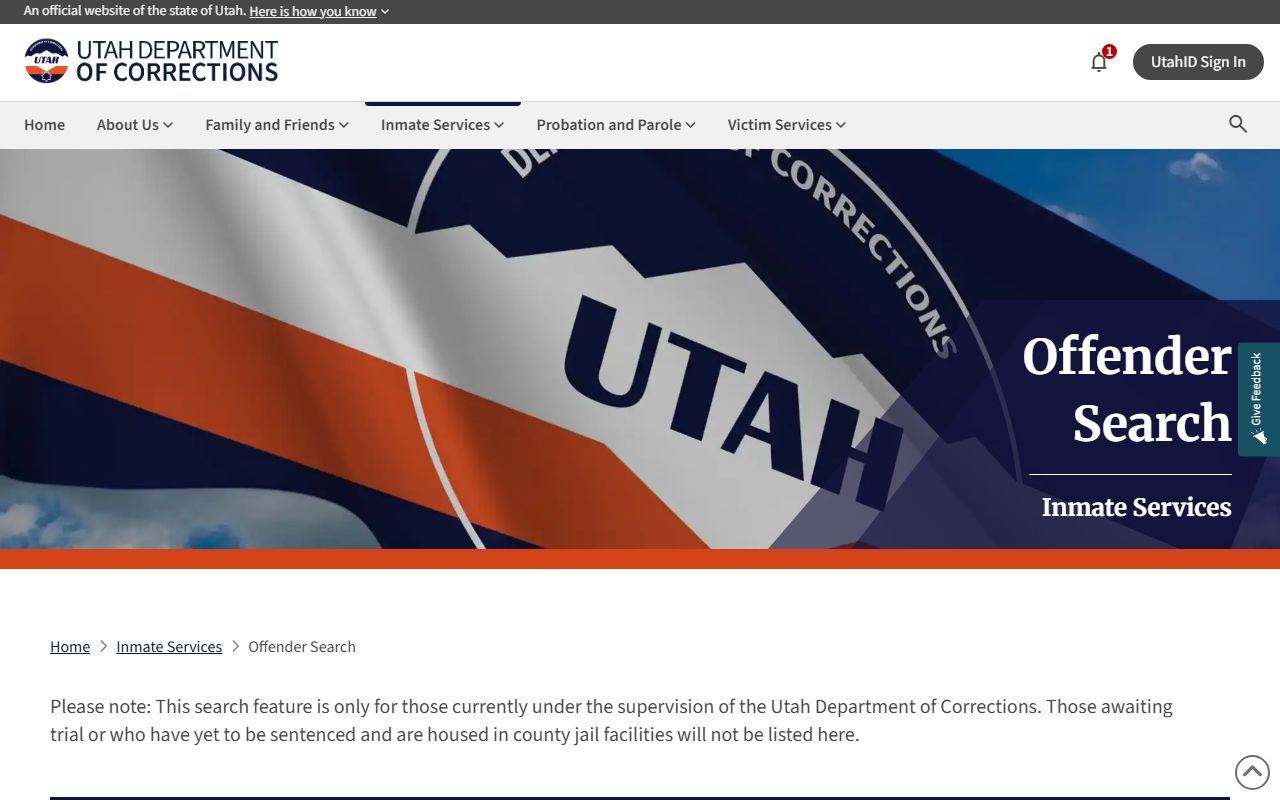
Use that warning to avoid treating a missing UDC result as proof that a recently arrested person is not in a county jail.
Are Utah Jail Mugshots Public Record?
Utah's statewide public-records law is the Government Records Access and Management Act, or GRAMA. Utah Code Section 63G-2-201 establishes a public right to inspect public records and receive copies subject to the statute. Utah Code Section 63G-2-204 describes written requests and agency response duties. For jail mugshots, the practical question is not only whether a record exists; it is which agency owns it and whether a restriction applies.
UDC says it provides public records in line with GRAMA, but safety, security, and privacy concerns can exempt records from release. For UDC inmates and offenders under supervision, UDC lists prison photo or mug shot among public information categories. County jail booking photos are county records, so the sheriff or county records office is usually the custodian. Utah's statewide law supplies the records framework, but each county's online roster may publish a different subset of fields.
Key Utah records rules:
Utah Code § 63G-2-201 recognizes public inspection and copy rights for public records, subject to GRAMA's classifications and limits.
Utah Code § 63G-2-204 covers written records requests and the duties of a governmental entity responding to a request.
How Long a Mugshot Stays on the Roster
The research does not support one statewide rule saying every Utah booking photo stays online for a fixed number of days. County roster systems vary. Some rosters are current-custody tools, so records can disappear or change after release or transfer. Others may keep booking pages, daily reports, or archives for different periods. UDC records also follow state-corrections public-information practices rather than county booking rules.
What is and isn't public: Public roster information may include a booking image, name, booking date, charge, housing location, or release-related status when the agency publishes it. Protected, controlled, private, sealed, expunged, juvenile, medical, security-sensitive, or investigative material may be withheld or redacted under Utah law and agency policy.
The UDC Inmate Placement Program page explains why a state inmate may appear physically in a county jail while still being under UDC supervision.
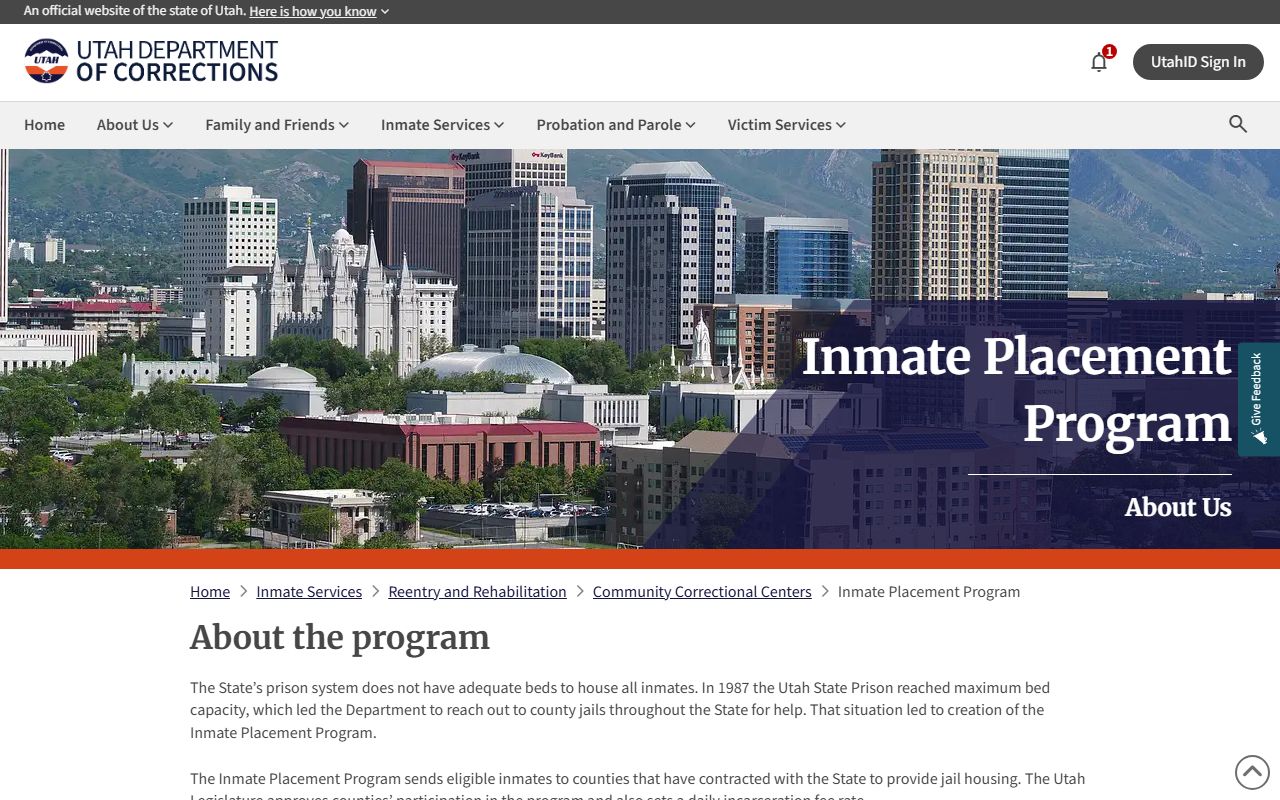
That overlap matters for photo requests because the county may control jail logistics while UDC controls the state offender record.
How to Request a Utah Booking Photo
File the request with the agency that owns the record. For a county jail booking photo, that usually means the county sheriff or county records office. For a UDC prison photo or state offender record, use UDC's records process. For court documents, use Utah Courts Xchange or the court process. For federal prison records, use the federal route. For immigration detention, use ICE records channels or ODLS for custody status.
- Search the public roster or UDC Offender Search first so the request can include the correct name, date, facility, and identifier.
- State that the request is for an existing booking photo, mug shot, inmate profile image, or related booking record.
- Include the person's full name, known aliases, date of birth if known, booking date or date range, facility, booking number, UDC number, court case number, and county.
- Send the written request to the proper custodian under GRAMA. Do not send a county jail photo request to UDC unless UDC owns the record.
- Expect redaction or denial if the record is sealed, expunged, juvenile, protected for safety or security, private, medical, investigative, or otherwise restricted.
UDC's public-information page also notes that requests for compiled data or agency explanations are different from requests for existing records. A precise request for an identifiable record is more likely to be routed correctly than a broad request for "all mugshots."
Mugshot Removal, Sealed Records, and Expungement Caution
Do not rely on a roster photo to decide the final outcome of a case. A jail roster entry is a custody record, not proof of guilt. Utah Courts Xchange is the better route for public case status, filed charges, hearings, judgments, and outcomes. Utah Courts says Xchange does not display sealed cases, expunged cases, juvenile delinquency cases, child welfare cases, termination cases, and other records that are not open to public inspection.
If a court record has been sealed or expunged, the practical step is to work through the official court and agency records process, then confirm whether the originating jail, sheriff, UDC, or court record has changed. The research supports a cautionary statement, not a promise that a photo will be removed from every public or third-party copy. Avoid private pay-for-removal offers. The reliable path is the official record-clearing or correction process, paired with agency confirmation.
For court-record context, use court records after a jail arrest to distinguish a booking record from the court case that may later be sealed, expunged, dismissed, amended, or resolved.
Utah Courts Xchange guidance explains the public case-information system and the categories that do not display, including sealed, expunged, and juvenile records.
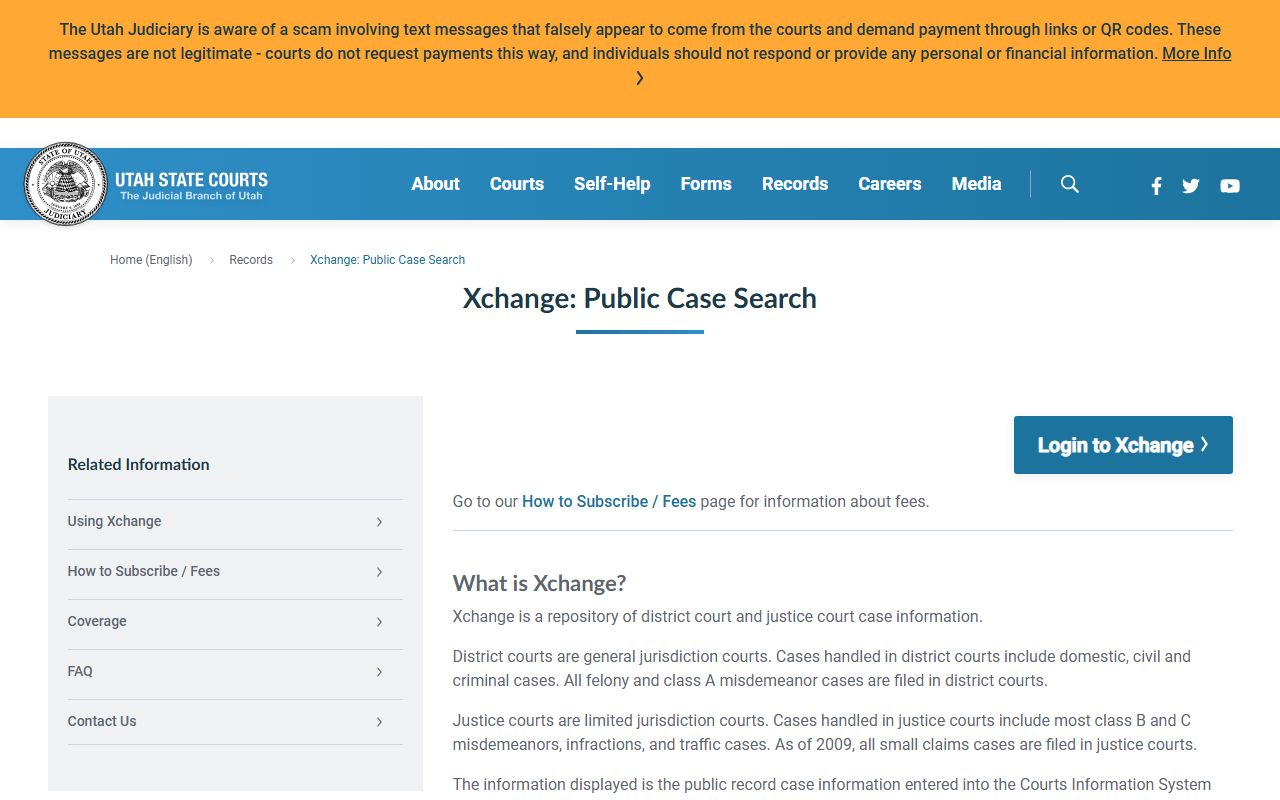
That court-record boundary is important because removing or restricting a booking image is usually tied to official court and agency records, not to a private search result.
Federal, State Prison, and Immigration Photo Records
Do not use a county mugshot workflow for every custody type. UDC records are state-corrections records, and UDC's public categories can include prison photo or mug shot. BOP records are federal prison records. ICE custody uses immigration systems and ODLS for detainee location. Utah Courts records show case information rather than jail photo galleries.
BOP's inmate locator covers sentenced federal inmates from 1982 forward and can search by number or name with filters. A BOP "Released" or "Not in BOP Custody" result means the person is not currently in BOP custody, but that does not answer county jail, UDC, ICE, or court status. ICE ODLS searches by A-Number or biographical information and is the proper public route when immigration detention is the concern.
The Utah VINELink portal supports custody lookup and notification, but it is not a mugshot gallery or a substitute for records requests.
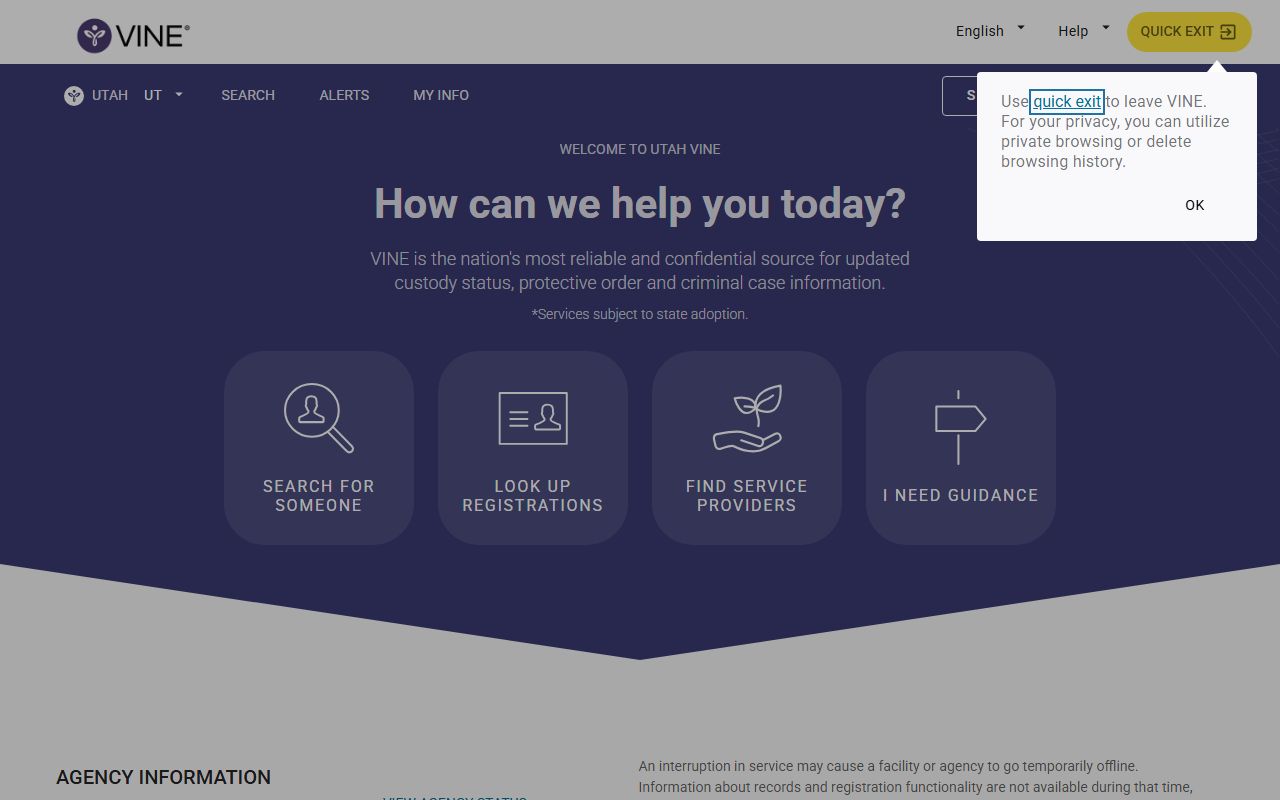
Use VINE when the goal is notice of release, transfer, escape, death, or custody movement rather than a copy of a booking image.
Use Official Utah Sources First
Commercial mugshot pages can be incomplete, stale, duplicated, or disconnected from the official case outcome. Utah's official routes are more reliable: county sheriffs for county booking records, UDC for state offender records, Utah Courts for case status, BOP for federal prison custody, ICE ODLS for immigration detention, and Utah VINELink for custody notifications. When a photo matters for employment, housing, licensing, legal strategy, or safety planning, verify with the originating public office rather than a copied image or reposted roster entry.