
The Utah Inmate Population
Utah does not place every person in custody into one public search box. The Utah inmate population is organized by custody status and by the agency that has legal control. New arrests, pretrial detainees, people serving short local sentences, and many local holds are handled by county sheriffs. Sentenced prison cases, parole, probation, community correctional centers, and selected county-jail placements are handled by the Utah Department of Corrections, officially abbreviated UDC. Court case records are separate from jail custody records, and federal or immigration custody uses national systems.
That structure matters because the same building can hold different legal populations. Utah's Inmate Placement Program allows UDC to house eligible state inmates in contract county jails, while the county jail in that same county may also hold local pretrial detainees. A person may therefore be physically inside a sheriff-operated jail but still be part of the UDC inmate population. The right search path depends on whether the person is awaiting trial, serving a county sentence, sentenced into state custody, held federally, detained by ICE, or being tracked for court events and notification.
The Utah Department of Corrections homepage is the statewide entry point for prison, supervision, reentry, victim services, and agency records.
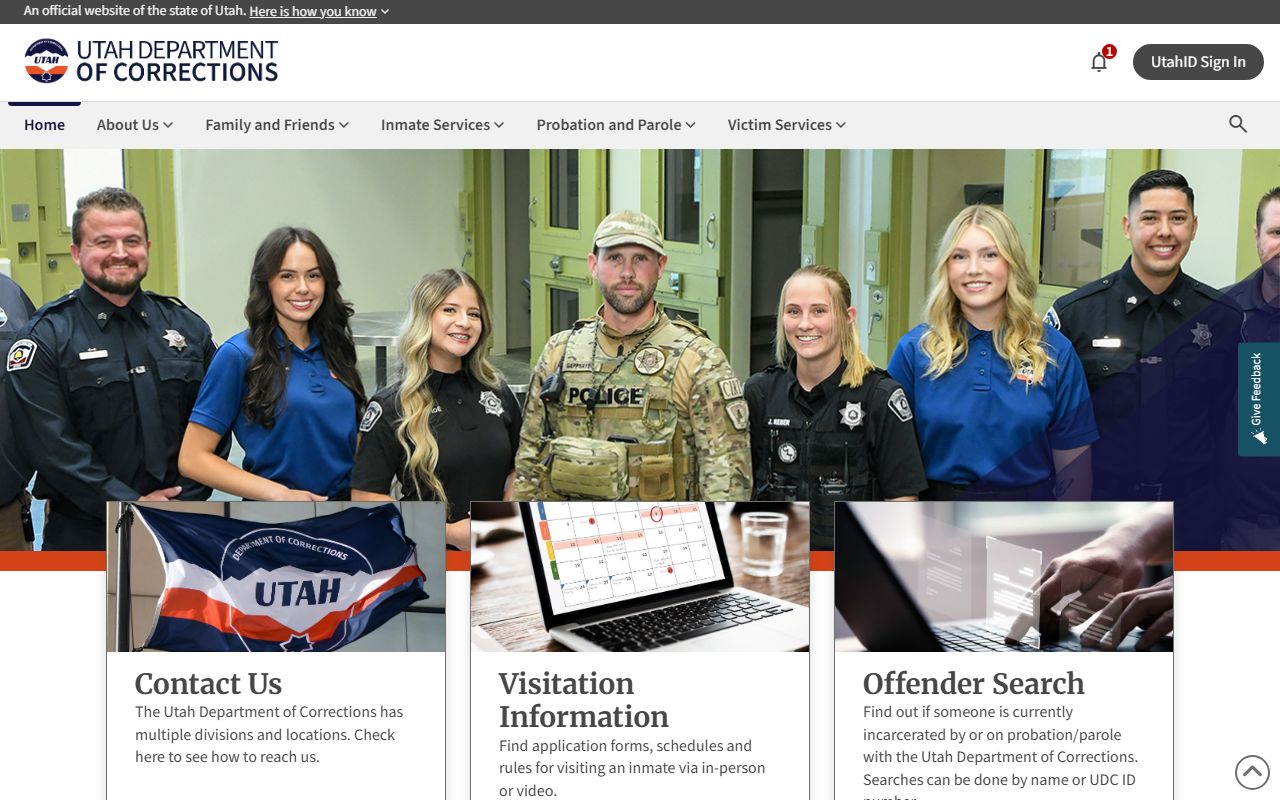
The agency site is useful for state custody, but county jail rosters remain the better starting point for recent bookings and pretrial jail custody.
Utah Inmate Population Statistics
UDC's public materials support a conservative statewide prison-population range rather than a single live daily count. The current UDC Inmate Placement Program page says Utah has between 6,000 and 6,500 state inmates in state correctional facilities. UDC's 2024 strategic plan describes approximately 6,400 incarcerated individuals and more than 17,000 people supervised in the community. A 2025 Justice Reinvestment update says Utah's prison population decreased 10 percent between FY2014 and FY2025. Those sources should be read together because Utah also places about one quarter of state inmates in county jails through UDC's contract program.
| Measure | Figure | Source |
|---|---|---|
| State prison population range | Between 6,000 and 6,500 state inmates | UDC Inmate Placement Program |
| UDC strategic-plan population | Approximately 6,400 incarcerated individuals | UDC 2024 Strategic Plan |
| Community supervision | More than 17,000 individuals | UDC 2024 Strategic Plan |
| County jail placement share | About 25 percent of state inmates | UDC correctional facilities overview |
Utah Inmate Population Trends
Utah's state prison count is below its FY2014 level, but the statewide system still depends on county jail contracts. The 2025 Justice Reinvestment/Criminal Justice Institute update reports a 10 percent prison-population decrease between FY2014 and FY2025. UDC's own material still describes a state custody population in the mid-6,000 range, while the Inmate Placement Program explains why county jails are part of the prison population picture. The trend is not simply "down" or "up." It is a smaller prison population than the FY2014 baseline, paired with continued use of county jail beds for state inmates.
The UDC Inmate Placement Program page explains the county-jail contract structure and why county facilities hold some state inmates.
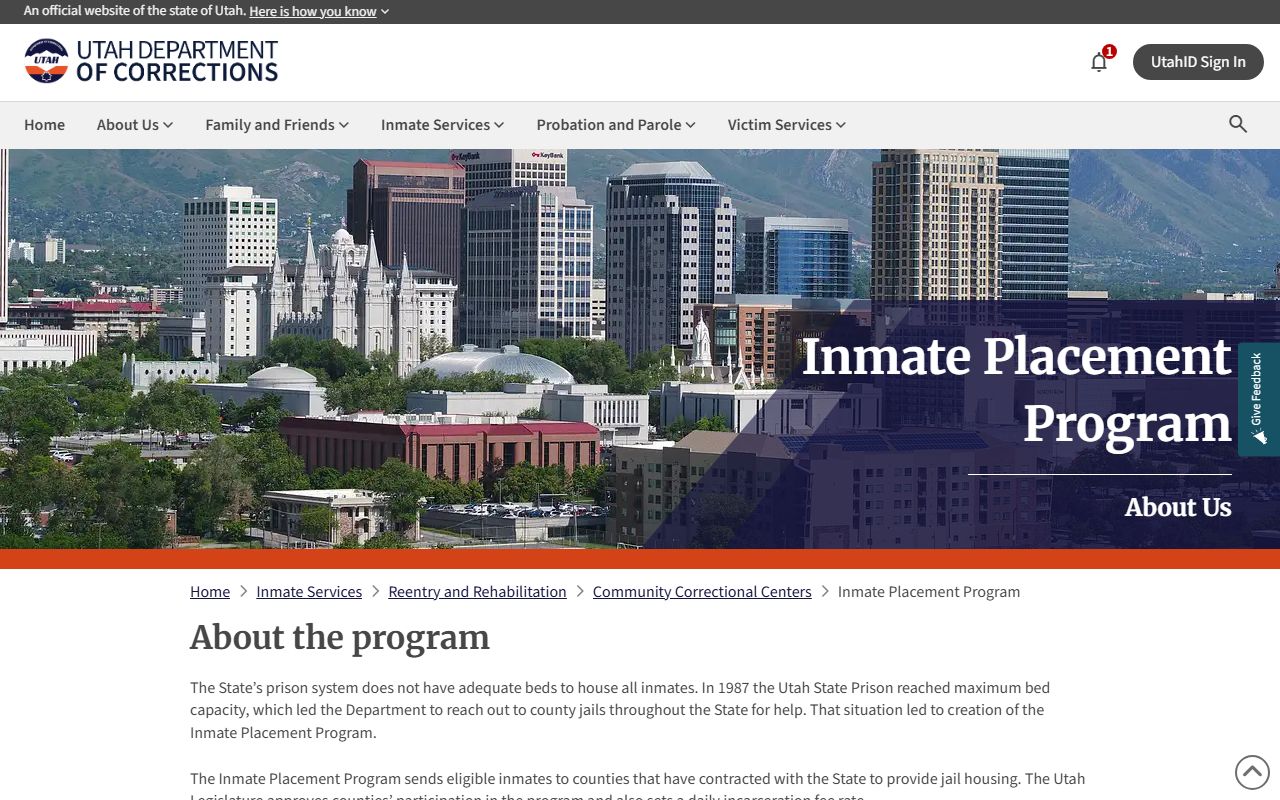
This placement model is one reason a statewide Utah inmate population search must route both to UDC and to county jail pages.
| Period | Population Signal | Meaning for Search |
|---|---|---|
| FY2014 to FY2025 | 10 percent prison-population decrease | Trend source is statewide prison population, not county jail daily rosters. |
| 2024 strategic-plan framing | Approximately 6,400 incarcerated people | UDC custody remains a major statewide search system. |
| Current UDC IPP framing | Roughly one quarter of state inmates in county jails | County jail location does not always mean county legal custody. |
Utah State Prison System
UDC operates two secure prison complexes: Utah State Correctional Facility in Salt Lake City and Central Utah Correctional Facility in Gunnison. It also operates six residential community correctional centers in Salt Lake, Weber, and Utah counties. The secure prisons are not the full state custody footprint because county jails also house state inmates under IPP. The state prison population is therefore best understood as a legal custody population that may be housed in prison, a community correctional center, or a contracted county jail.
The UDC correctional facilities overview identifies the two state prisons, six community correctional centers, and county placement model.
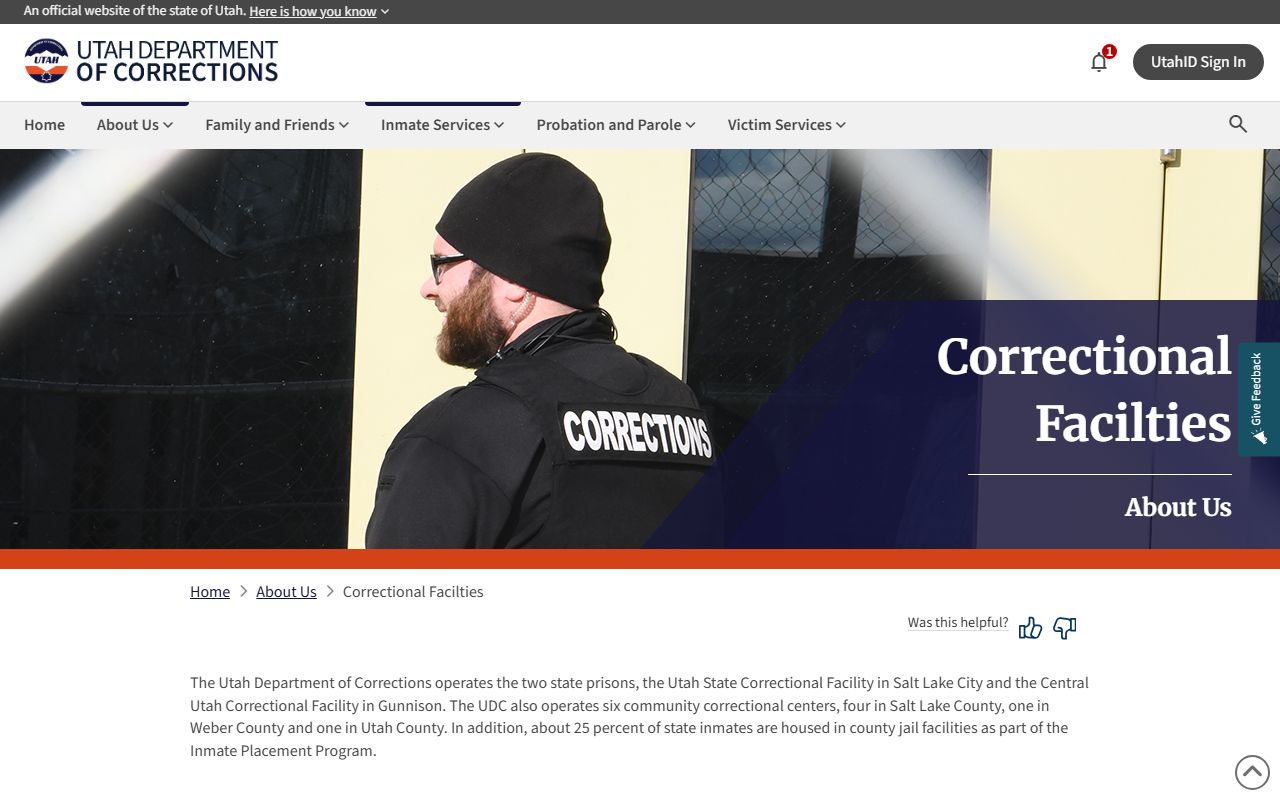
Those facility categories should not be mixed with county booking rosters, which are operated by county sheriffs for local jail custody.
| Layer | Utah Examples | Lookup Route |
|---|---|---|
| Secure state prison | Utah State Correctional Facility; Central Utah Correctional Facility | UDC inmate population page and UDC Offender Search |
| Community correctional center | Bonneville, Orange Street, Northern Utah, Timpanogos, and related UDC centers | UDC/AP&P route unless a separate county booking exists |
| County jail placement | UDC contract counties listed by the Inmate Placement Program | UDC for legal custody, county page for building rules |
Laws Governing Utah Inmate Records
Utah public records are governed statewide by the Government Records Access and Management Act, usually called GRAMA. Utah Code Section 63G-2-201 establishes the right to inspect public records and receive copies subject to the rest of the chapter. Utah Code Section 63G-2-204 describes written requests and agency response duties. UDC applies GRAMA to corrections records, but it also warns that safety, security, privacy, medical, juvenile, sealed, expunged, or protected material may be withheld or redacted.
Utah records rule: Public inmate information can include legal status, offender number, housing location, sentence details, board dates, court case information, and a prison photo or mug shot when UDC treats the item as public information. A GRAMA request is still needed for many records that are not already posted or compiled.
Search the Utah Inmate Population
A useful Utah inmate search starts with custody triage. UDC expressly says its Offender Search is for people currently under UDC supervision and that people awaiting trial or not yet sentenced in county jail are not listed. That warning is the key statewide rule. If the person was just arrested, start with the county where the arrest or booking happened. If the person has been sentenced to prison, is on probation or parole, or may be under UDC supervision in a county placement, start with UDC.
The official UDC offender search is the state-corrections lookup for state prison, parole, probation, and UDC-supervised people.
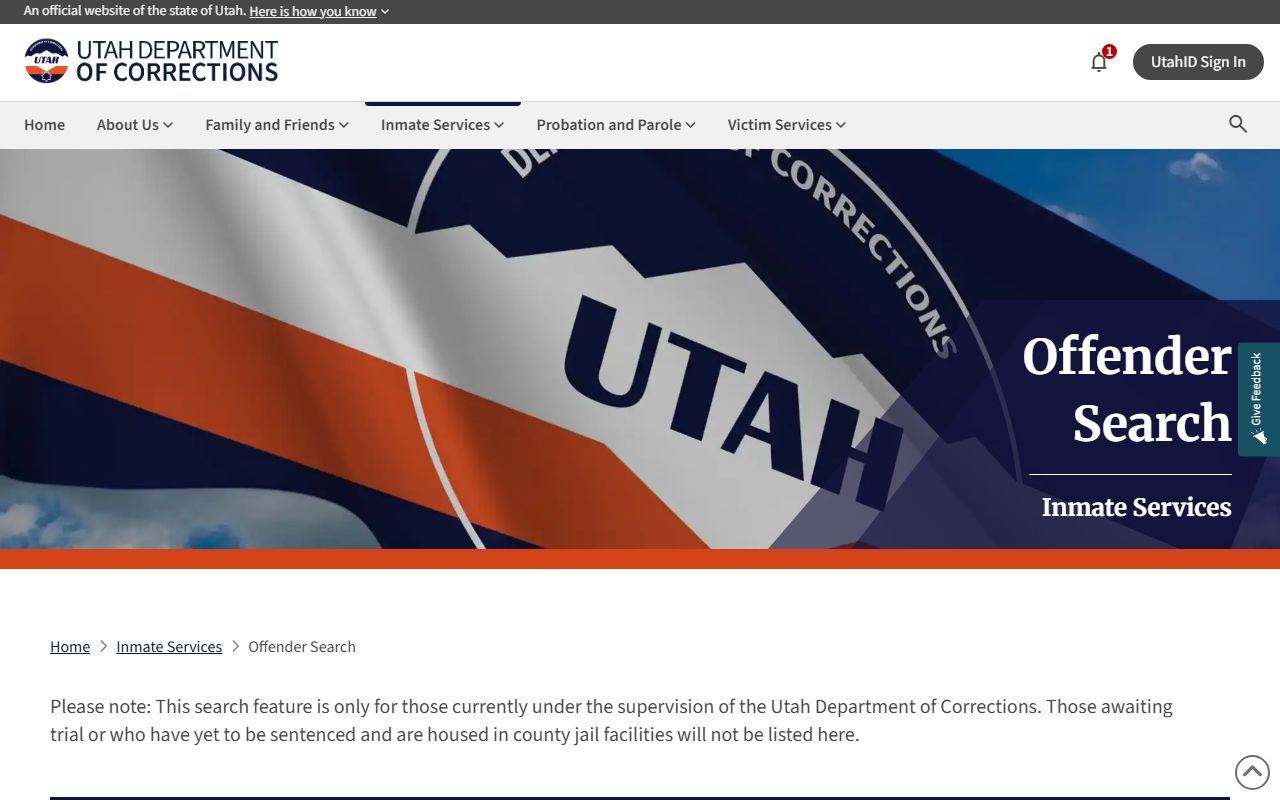
The exclusion for unsentenced county jail detainees is why the county directory remains essential for the local jail side of the Utah inmate population.
- Start with the county jail roster when the person was arrested today, is awaiting a first appearance, or is serving a local jail sentence.
- Use UDC Offender Search when the person is sentenced to Utah prison, on parole, on probation, or held as a state inmate in a contract county jail.
- Check the county page for facility-specific visiting, mail, phone, commissary, and local release-processing rules.
- Use the BOP locator for sentenced federal custody and ICE ODLS for immigration detention.
- Use Utah VINE/VINELink when the goal is notification of release, transfer, escape, death, or certain UDC movement events.
Find Utah Inmates by County
County jail rosters are the practical route for the local portion of the Utah inmate population. Each Utah county operates or uses a county-level custody path, and a few counties require special handling. Daggett County's jail is identified in research as closed. Morgan County uses Weber County Correctional Facility for jail housing while keeping local holding cells for short-term processing. Piute and Wayne route sentenced jail time to Sevier County Jail. Salt Lake County has both county jail facilities and UDC facilities within the county, so the legal custody system matters as much as the physical location.
State and Federal Inmate Search
State, federal, immigration, court, and notification tools serve different parts of the search. The Federal Bureau of Prisons inmate locator covers federal inmates from 1982 forward and supports number or name searches. The ICE Online Detainee Locator System is used for immigration custody, with search by A-Number or biographical information. Utah VINE provides custody notification for Utah prisons and jails, while Utah Courts Xchange provides public case information for district and justice courts. None of those systems replaces a current county jail roster for a new local booking.
The BOP inmate locator is national, so Utah federal search does not depend on a Utah-named BOP prison.
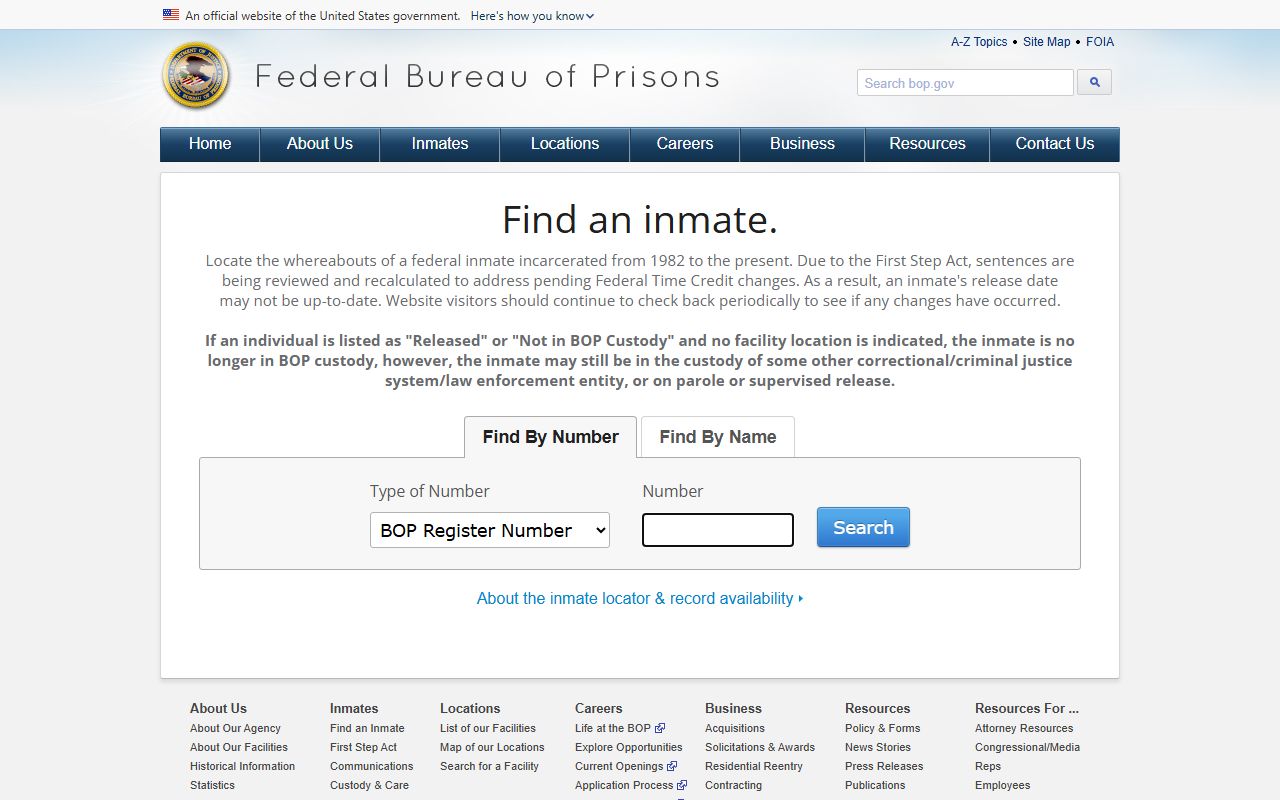
A released or not-in-BOP-custody result can still require checking UDC, a county jail, ICE, VINE, or court records.
The Utah VINELink portal supports custody lookups and notification registration.
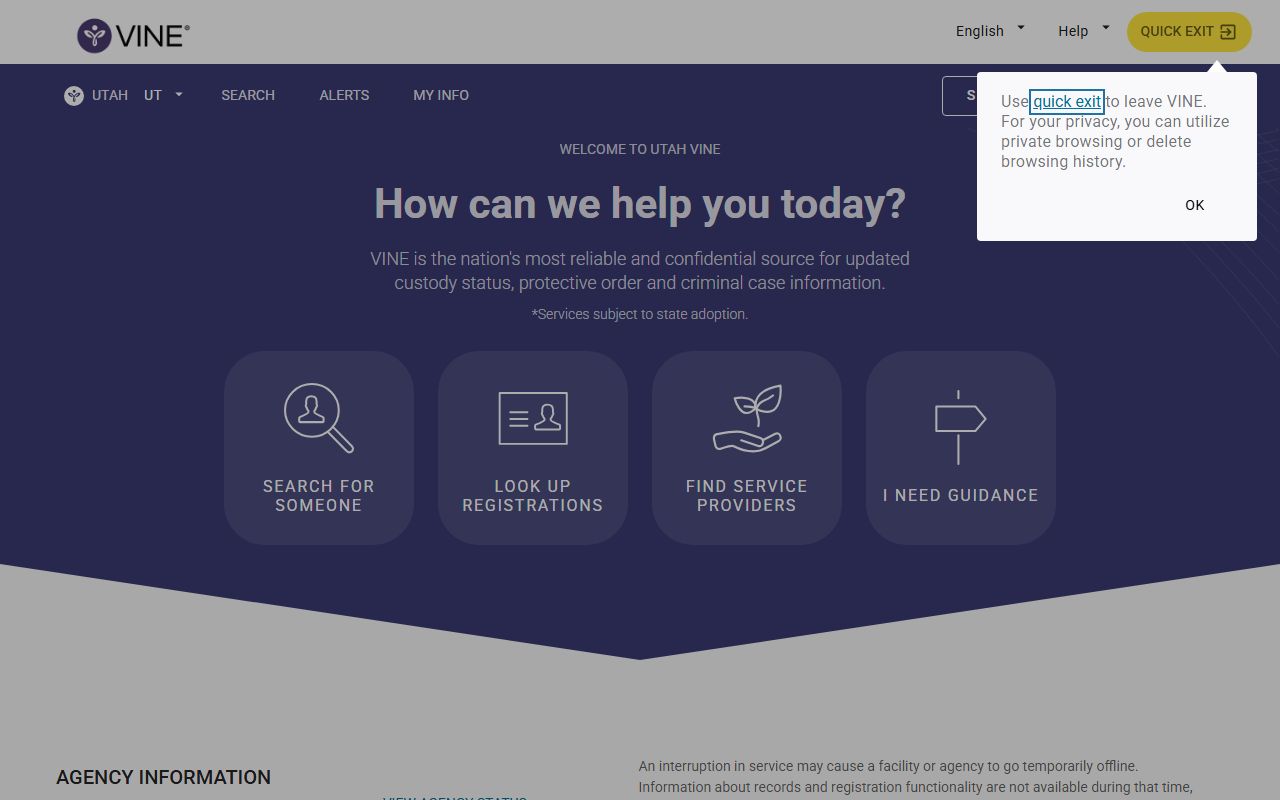
VINE is a notification support tool, not a complete jail roster and not a substitute for safety planning.
Utah Court Records After Arrest
Jail rosters show custody. Court records show the case path after an arrest. Utah Courts says Xchange is a repository of public district court and justice court case information. District courts handle all felony and class A misdemeanor cases, while justice courts handle most class B and C misdemeanors, infractions, and traffic cases. Xchange can show party names, assigned judges, attorneys, documents filed, hearings, judgments, and outcomes of completed cases, but sealed, expunged, juvenile delinquency, child welfare, termination, and other nonpublic records are not displayed.
The Utah Courts Xchange information page explains the court-record scope and the limits on public display.
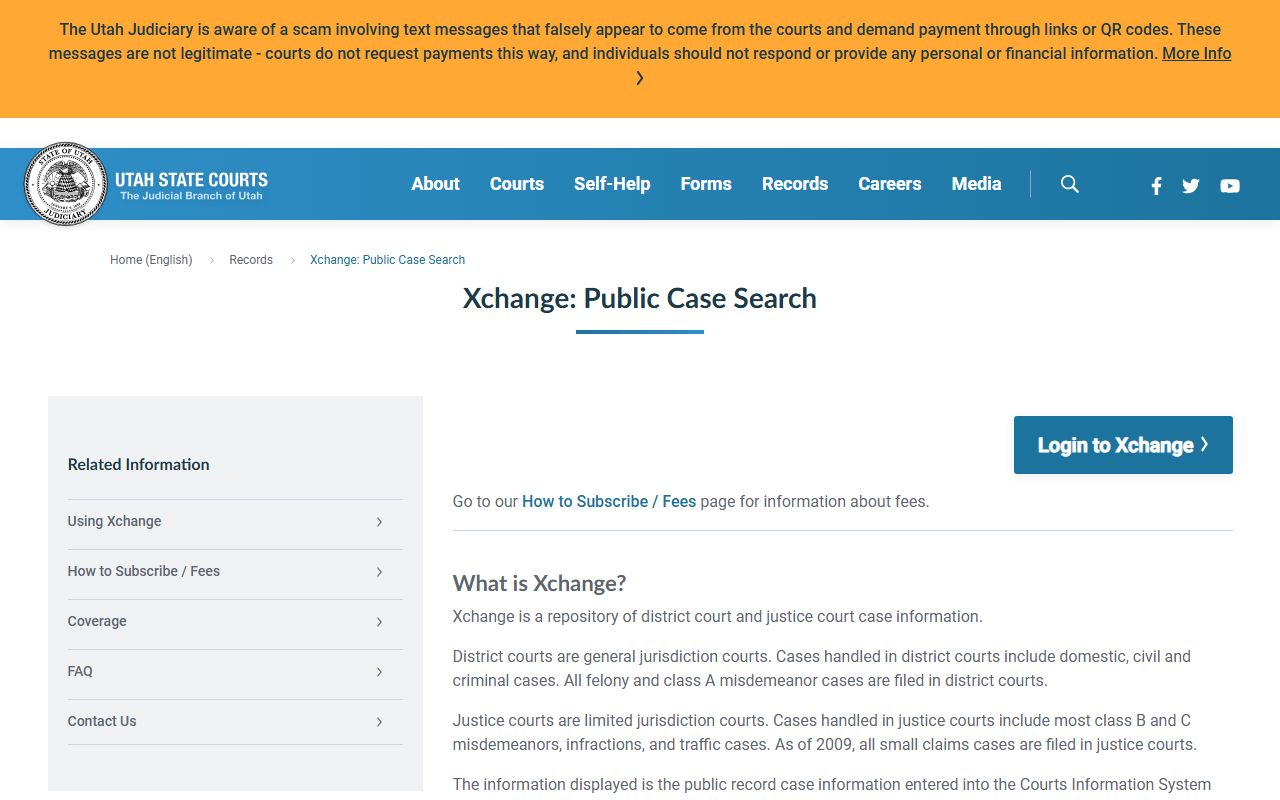
Xchange helps with charges and case status, but custody status still comes from the jail, UDC, BOP, ICE, or VINE source that covers the person.
Utah Detention Facilities
The statewide facility directory lists county jails, work-release or holding settings, UDC prisons, community correctional centers, and gap-researched juvenile/youth facilities. Adult inmate search should stay focused on county sheriffs, UDC, BOP, ICE, Utah Courts, and VINE. Juvenile rows are included for statewide directory completeness, but they are not adult inmate roster systems and many youth records are confidential or restricted.
The Utah Juvenile Justice and Youth Services detention page shows why youth detention must be separated from adult inmate population search.
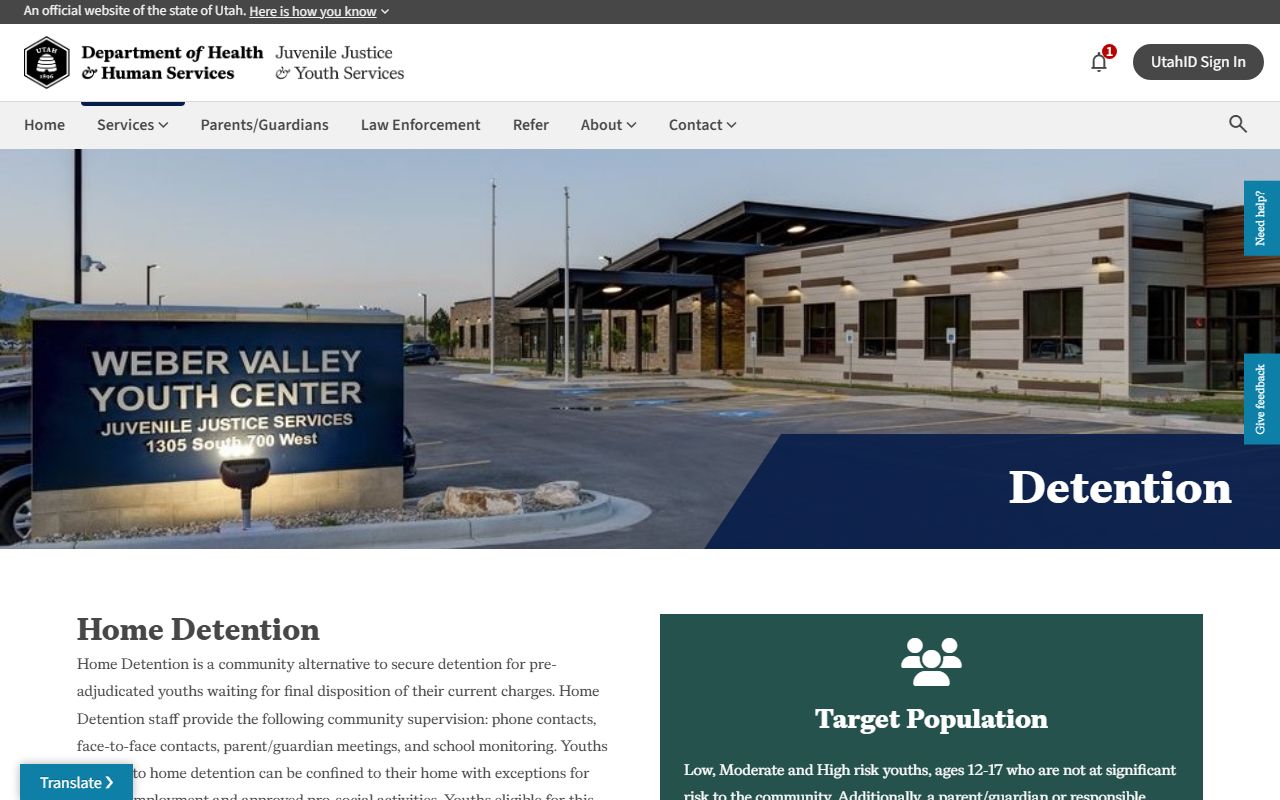
The facility directory labels those youth rows clearly so an adult jail roster search does not get routed into the wrong system.
Utah Inmate Population FAQ
How large is the Utah inmate population?
UDC public materials place the state prison population in the mid-6,000 range. The Inmate Placement Program page says Utah has between 6,000 and 6,500 state inmates in state correctional facilities, while UDC's 2024 strategic plan says approximately 6,400 incarcerated individuals and more than 17,000 people under community supervision. County jail daily counts are handled locally and are not presented in the research as one statewide live number.
Where should a recent Utah arrest be searched?
A recent arrest should be searched through the county jail roster for the county that booked or holds the person. UDC says people awaiting trial or not yet sentenced in county jail are not listed in its offender search. The county directory is the routing point for those local roster searches.
When should UDC Offender Search be used?
Use UDC Offender Search when the person is sentenced to Utah prison, on probation, on parole, assigned to Adult Probation and Parole, in a UDC community correctional center, or possibly housed in a county jail as a UDC state inmate. Search by UDC ID if available, then by name with spelling variants.
Why can one Utah inmate search require more than one source?
Utah's custody systems overlap more than a simple county-by-county search suggests. A person can begin in a sheriff's jail after arrest, move into a court case through district or justice court, enter UDC custody after sentencing, be placed by UDC in a county jail, or be moved through federal or immigration custody outside the state system. VINE may also receive a custody feed for notification even though it is not the office that created the booking or sentence record. When a name is missing, check whether the search is being run against the wrong custody layer before assuming the person was released or never booked.
What is the safest way to confirm a Utah release date?
For a local jail release, confirm with the county jail or sheriff because local holds, warrants, court orders, bail, time served, and release processing control the timing. For a prison release or parole date, check the current UDC record and Board of Pardons and Parole information. UDC's release-day material says most releases are processed at Utah State Correctional Facility, while rare county-jail release exceptions are communicated to families. VINE can help with notices, but it should not be the only source for safety or timing decisions.